
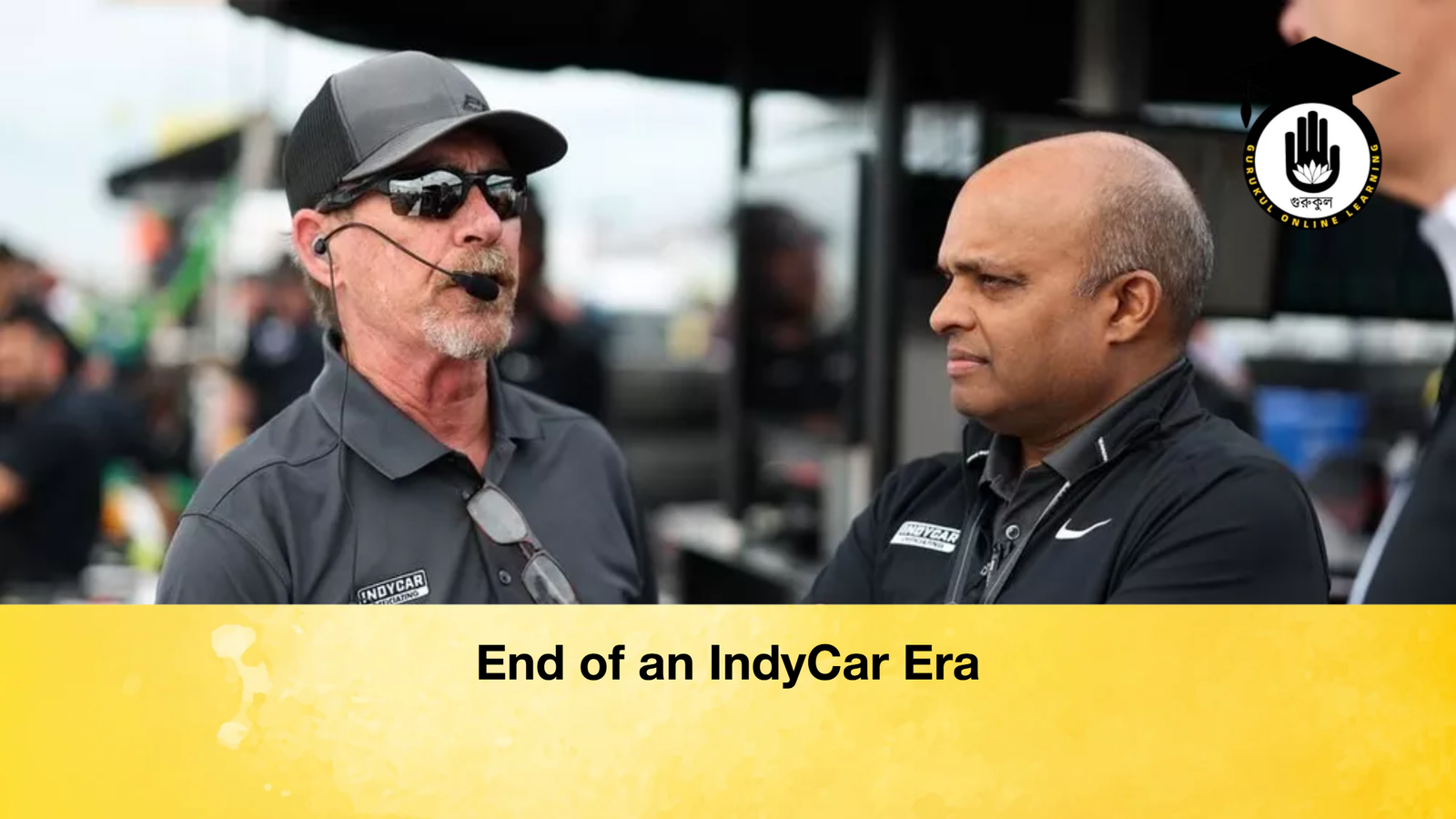

The mid-season retirement of longtime IndyCar technical chief Kevin “Rocket” Blanch has prompted an outpouring of respect from across the paddock, with IndyCar Independent Officiating Board (IOB) Chairman Raj Nair admitting he had hoped the veteran official might postpone his departure until the end of the 2026 campaign.
Blanch formally stepped down on Thursday after an extraordinary 36-year association with the IndyCar Series and more than two decades as one of the championship’s most influential technical figures. His departure marks the end of a remarkable chapter in American open-wheel racing, one defined by technical expertise, consistency and an unwavering commitment to the sport.
While his retirement had been anticipated for some time, the announcement was nevertheless met with a sense of sadness by those who have worked alongside him. Among them was Scot Elkins, Managing Director of Officiating, who described the loss as a significant one for the series.
A Career Defined by Dedication
Blanch’s retirement comes after an astonishing run of 555 consecutive IndyCar race events, a statistic that illustrates both his durability and dedication.
Earlier this year, when IndyCar Officiating was restructured into an independent body, Blanch agreed to remain in his position to help oversee the crucial opening months of the new era, including the demanding Month of May programme and the Indianapolis 500.
According to Nair, that commitment proved invaluable.
“To be honest, we wanted to get every race we could out of him,” Nair said.
“He had indicated his desire to retire, and we were fortunate enough to talk him into staying. He’s been a tremendously valuable asset.”
Although Blanch fulfilled the commitment he had made when the new officiating structure was introduced, Nair acknowledged that he had quietly hoped the veteran official might decide to remain longer.
“Even talking to him last night, we were hoping he’d stay for another race or even the rest of the season.
“But he honoured his commitment to us, and we respect that.”
Leadership Transition
With Blanch stepping aside, IndyCar has moved swiftly to ensure continuity within its technical department.
IndyCar Technical Leadership Change
| Position | Outgoing Official | Incoming Official |
|---|---|---|
| Technical Director | Kevin “Rocket” Blanch | Nick Allen |
| Years in IndyCar | 36 | Joined IndyCar in January 2026 |
| Consecutive Events Worked | 555 | N/A |
| Retirement Date | June 2026 | Assumes role immediately |
Allen, who joined IndyCar earlier this year as Technical Inspection Manager, now takes over one of the most demanding and visible technical positions in North American motorsport.
The timing is particularly challenging. Following Detroit, the championship heads directly to World Wide Technology Raceway before several teams participate in testing programmes at Road America, leaving little opportunity for a gradual transition.
No Surprise, But Genuine Disappointment
When asked whether Blanch’s decision had left officials feeling blindsided, Nair was clear that the retirement itself was expected. However, that did not diminish the disappointment.
“No, I wouldn’t say blindsided,” he explained.
“But I’d be lying if I said I wasn’t hoping he might change his mind.”
Nair also joked about the immense workload associated with running a major racing series.
“He’s done 555 straight races. I’ve done only a fraction of that this year and I’m already worn out.
“I can’t blame the guy.”
The comment highlighted the demanding nature of IndyCar’s travelling schedule and the personal sacrifices made by officials who spend much of their lives at race circuits.
A Wealth of Knowledge
Perhaps the greatest challenge created by Blanch’s departure is the loss of institutional knowledge.
Since the Independent Officiating Board was formed in late 2025, Nair, alongside fellow board members Ray Evernham and Ronan Morgan, has relied heavily upon Blanch and Race Director Kyle Novak to understand the complexities of modern IndyCar competition.
According to Nair, Blanch’s expertise extended far beyond technical regulations.
“Rocket has been a wealth of knowledge,” he said.
“As I’ve gotten to know him better, is he rough around the edges? Absolutely.
“But he reminds me of many of the people I worked with when I first entered the automotive industry. Those were the individuals whose passion, knowledge and integrity set the standard.”
That authenticity, combined with decades of experience, earned Blanch widespread respect throughout the paddock.
An Enduring Legacy
Technical directors rarely enjoy the public profile of drivers or team principals, yet their influence can shape an entire championship. Throughout his career, Blanch helped oversee technical compliance, maintain competitive fairness and guide teams through numerous regulatory changes.
His work spanned multiple eras of IndyCar racing, from the CART years through reunification and into the modern hybrid age.
Kevin Blanch at a Glance
| Career Statistic | Detail |
|---|---|
| Total Years in IndyCar | 36 |
| Years as Technical Director | More than 20 |
| Consecutive Events Worked | 555 |
| Final Event Period | 2026 Month of May and Detroit |
| Successor | Nick Allen |
As IndyCar enters a new chapter under independent officiating, Blanch leaves behind a legacy built on technical excellence, dedication and professionalism.
For Nair and many others within the sport, the feeling is one of gratitude rather than regret.
“He’s put his heart and soul into this series,” Nair said.
“He’s been a huge part of its success, and I want to personally thank him for everything he’s done for IndyCar, for IndyCar Officiating and for helping all of us get up to speed.”
After 555 consecutive race weekends and more than three decades at the heart of American open-wheel racing, few could argue that Kevin “Rocket” Blanch has earned his retirement. Yet the reaction throughout the paddock demonstrates just how difficult he will be to replace.